


- Messages
- 833
- Reaction score
- 1,741
- Points
- 920
Suggestion Title: No Entry and Keep Left/Right Police Signs
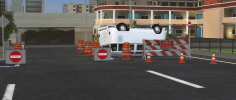
Suggestion Description: Add three extra material body groups for the police-sign model, exclusive to the Road Traffic Unit:
- 'No Entry': a grey field with a standard 'No Entry' sign in the middle.
- 'Keep Left' and 'Keep Right': a grey field with a diagonally left or right pointing arrow in a blue circle.
Changes to the handbook would be necessary to ensure that the usage of these signs is regulated.
Examples of usage would be for closing roads in one direction but not the other (where the 'Road Closed' sign is not defined in law and is overused due to its presence on all large barricades), narrowing lanes, setting up contraflow systems, checkpoints,
Why should this be added?:
+ Clearly and unambiguously gives directions to drivers - reduces drivers trying to decipher what the police want them to do
+ Understood meaning that is codified in law - provided signs are reasonable and necessary for safety drivers can be held responsible under law 12.5
What negatives could this have?:
- Improper use that catches drivers out; though being limited to RTU and requiring a policy backing this is less of an issue.
What problem would this suggestion solve?: Signage ambiguity that is not supported by the penal code.
Useful Images:

Suggestion Description: Add three extra material body groups for the police-sign model, exclusive to the Road Traffic Unit:
- 'No Entry': a grey field with a standard 'No Entry' sign in the middle.
- 'Keep Left' and 'Keep Right': a grey field with a diagonally left or right pointing arrow in a blue circle.
Changes to the handbook would be necessary to ensure that the usage of these signs is regulated.
Examples of usage would be for closing roads in one direction but not the other (where the 'Road Closed' sign is not defined in law and is overused due to its presence on all large barricades), narrowing lanes, setting up contraflow systems, checkpoints,
Why should this be added?:
+ Clearly and unambiguously gives directions to drivers - reduces drivers trying to decipher what the police want them to do
+ Understood meaning that is codified in law - provided signs are reasonable and necessary for safety drivers can be held responsible under law 12.5
What negatives could this have?:
- Improper use that catches drivers out; though being limited to RTU and requiring a policy backing this is less of an issue.
What problem would this suggestion solve?: Signage ambiguity that is not supported by the penal code.
Useful Images:


