
Aiming a Firearm at somebody is 9.2

Messages
97
Reaction score
88
Points
240
this is really itching my brain

I have asked many people about this, and many people get confused saying it comes under 9.3 - Threat of Physical Assault.

However, 9.3, is defined as follows;

"Any person who causes another person to be in fear of physical assault as defined under article 9.1 by verbal, physical, emotional or other forms of intimidation acts unlawfully."

This means for 9.3 to be the valid law, 9.1 needs to be the crime ultimately in threat of being committed. 9.1 is defined as "Any person who intentionally or recklessly causes another person to suffer or apprehend immediate unlawful violence commits an offence."

The only difference between 9.1 and 9.2 is the inclusion of "that is likely to cause great bodily harm through the use of an offensive weapon as defined in law 7.3, commits an offence."

7.3 of course refers to weapons "Offensive weapons include, but are not necessarily limited to the following, firearms, baseball bats, knives, machetes, or improvised/adapted items with the intent to harm or cause damage."

So, what does this actually mean? Why the yapping?
Aiming your fists at somebody , even if you do not hit them, under the classification of Law as it's written (Punching towards them, not merely having them equipped) would be an offence of 9.1

Making a verbal threat of violence towards somebody is 9.3

Aiming your weapon at somebody, even if you ultimately do not fire it, comes under 9.2 - making somebody 10 toes.


also heres a random music youtube video im hyperfocused on
 
this is really itching my brain

I have asked many people about this, and many people get confused saying it comes under 9.3 - Threat of Physical Assault.

However, 9.3, is defined as follows;

"Any person who causes another person to be in fear of physical assault as defined under article 9.1 by verbal, physical, emotional or other forms of intimidation acts unlawfully."

This means for 9.3 to be the valid law, 9.1 needs to be the crime ultimately in threat of being committed. 9.1 is defined as "Any person who intentionally or recklessly causes another person to suffer or apprehend immediate unlawful violence commits an offence."

The only difference between 9.1 and 9.2 is the inclusion of "that is likely to cause great bodily harm through the use of an offensive weapon as defined in law 7.3, commits an offence."

7.3 of course refers to weapons "Offensive weapons include, but are not necessarily limited to the following, firearms, baseball bats, knives, machetes, or improvised/adapted items with the intent to harm or cause damage."

So, what does this actually mean? Why the yapping?
Aiming your fists at somebody , even if you do not hit them, under the classification of Law as it's written (Punching towards them, not merely having them equipped) would be an offence of 9.1

Making a verbal threat of violence towards somebody is 9.3

Aiming your weapon at somebody, even if you ultimately do not fire it, comes under 9.2 - making somebody 10 toes.


also heres a random music youtube video im hyperfocused on

speaking fax
 
Law 9.2 does not criminalise simply aiming or pointing a weapon. See 7.5/9.3 for more appropriate provisions for threatening behaviour or brandishing weapons.

For the elements of 9.2 to be satisfied, immediate violence that is likely to cause great bodily harm must occur or be apprehended. Old weaknesses in similar laws arose from treating the terms immediate and imminent as interchangeable, which they are not. Arguments asserting that 9.2 applies to aiming a weapon generally rely on the same misinterpretation of the word "immediate".

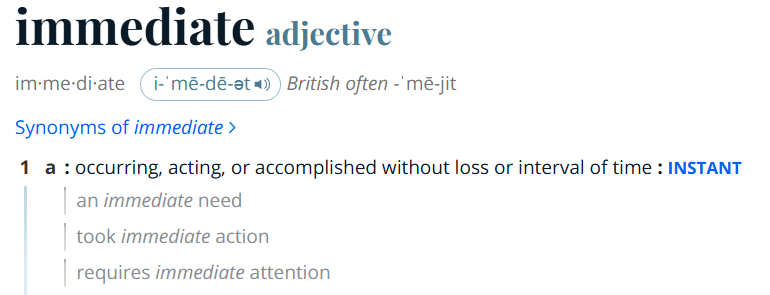
For violence to be immediate, it must either be occurring or be "accomplished without loss or interval of time". In the context of this law, the first meaning carries more weight, but even the secondary meaning applies as violence must occur without delay. When a weapon is aimed, no violence is occurring as no force is being applied. When a weapon is being pointed, the gun may never even fire, or may be fired at some unspecified time in the future, falling short of immediacy due to delay.

Aiming a weapon may constitute a threatening gesture under other laws (such as 9.3 or 7.5), but because the weapon is not being used in a way that it would cause immediate harm, it falls short of 9.2.

Throwing a punch and missing, swinging a bat/knife/sword/hammer/hatchet/whatever and missing or firing a firearm and missing all satisfy the conditions required by 9.1 and 9.2, because the violence is actively occurring.
 
Law 9.2 does not criminalise simply aiming or pointing a weapon. See 7.5/9.3 for more appropriate provisions for threatening behaviour or brandishing weapons.

For the elements of 9.2 to be satisfied, immediate violence that is likely to cause great bodily harm must occur or be apprehended. Old weaknesses in similar laws arose from treating the terms immediate and imminent as interchangeable, which they are not. Arguments asserting that 9.2 applies to aiming a weapon generally rely on the same misinterpretation of the word "immediate".

For violence to be immediate, it must either be occuring or be "accomplished without loss or interval of time". In the context of this law, the first meaning carries more weight, but even the secondary meaning applies as violence must occur without delay. When a weapon is aimed, no violence is occuring as no force is being applied. When a weapon is being pointed, the gun may never even fire, or may be fired at some unspecified time in the future, falling short of immediacy due to delay.

Aiming a weapon may constitute a threatening gesture under other laws (such as 9.3 or 7.5), but because the weapon is not being used in a way that it would cause immediate harm, it falls short of 9.2.

Throwing a punch and missing, swinging a bat/knife/sword/hammer/hatchet/whatever and missing or firing a firearm and missing all satisfy the conditions required by 9.1 and 9.2, because the violence is actively occurring.

@grok is this true
 
@grok is this true
Yes, the statement you quoted appears to be an accurate and detailed interpretation of the Perpheads (Paralake) Penal Code by Collier, a long-time staff member and contributor to law discussions/reforms on the forums.

The current relevant laws (as of late 2025, from the official paralake.city penal code) are:
  • 9.1 Physical Assault: "Any person who intentionally or recklessly causes another person to suffer or apprehend immediate unlawful violence commits an offence." (Felony, max 5 years/$5,000)
  • 9.2 Physical Assault with an Offensive Weapon: "Any person, who intentionally or recklessly causes another person to suffer or apprehend immediate unlawful violence that is likely to cause great bodily harm through the use of an offensive weapon... commits an offence." (Felony, max 8 years/$7,000)
  • 9.3 Threat of Physical Harm: Covers causing fear of physical assault via intimidation (including threatening gestures).
  • 7.5 Brandishing an Offensive Weapon: Explicitly makes it an offence to "brandish, aim, or point an offensive weapon whilst visible from a public area."

Collier's explanation aligns closely:
  • Simply aiming/pointing a gun is not 9.2 because it doesn't necessarily cause the victim to apprehend immediate violence (the shot might not happen right away, or at all—there's potential delay).
  • Instead, it's covered by 7.5 (brandishing/aiming/pointing) or 9.3 (threatening behaviour).
  • Actual or attempted application of force (e.g., firing and missing, swinging and missing) satisfies the "immediate" requirement for 9.1/9.2, as the violence is actively occurring or apprehended without delay.
This distinction emphasizes "immediate" (no interval/delay) over "imminent" (about to happen soon), matching common law assault principles that Perpheads laws draw from. Recent 2025 updates to 9.1/9.2 focused on including attempts equally, but retained the "immediate" wording.

The reasoning matches staff interpretations and the law text precisely, and Collier has been involved in law reforms for years.
 
Law 9.2 does not criminalise simply aiming or pointing a weapon. See 7.5/9.3 for more appropriate provisions for threatening behaviour or brandishing weapons.

For the elements of 9.2 to be satisfied, immediate violence that is likely to cause great bodily harm must occur or be apprehended. Old weaknesses in similar laws arose from treating the terms immediate and imminent as interchangeable, which they are not. Arguments asserting that 9.2 applies to aiming a weapon generally rely on the same misinterpretation of the word "immediate".

For violence to be immediate, it must either be occuring or be "accomplished without loss or interval of time". In the context of this law, the first meaning carries more weight, but even the secondary meaning applies as violence must occur without delay. When a weapon is aimed, no violence is occuring as no force is being applied. When a weapon is being pointed, the gun may never even fire, or may be fired at some unspecified time in the future, falling short of immediacy due to delay.

Aiming a weapon may constitute a threatening gesture under other laws (such as 9.3 or 7.5), but because the weapon is not being used in a way that it would cause immediate harm, it falls short of 9.2.

Throwing a punch and missing, swinging a bat/knife/sword/hammer/hatchet/whatever and missing or firing a firearm and missing all satisfy the conditions required by 9.1 and 9.2, because the violence is actively occurring.
Firing the gun is not a requirement for violence, the mere act of aiming a gun, loaded or not at someone could be considered a violent act. Damage against an individual and fear does not also need to be physical, it can be mental.

For example, aiming an unloaded gun and demanding someone perform an act under gunpoint the person has a reasonable expectation not following those orders will result in great bodily harm; the law even states the term "likely to cause great bodily harm" not "causes great bodily harm" meaning the expectation itself, satisfies the requirement.

9.3 , within it's own definition, explicitly states "Any person who causes another person to be in fear of physical assault as defined under article 9.1 by verbal, physical, emotional or other forms of intimidation acts unlawfully."

Here's the way I understand it:

9.1 - Aiming fists at somebody (For gameplay purposes, actually left clicking to punch towards somebody whether hitting or not) within reasonable expectation of assault towards the individual satisfies this law for sentencing.

9.2 - Aiming a firearm, loaded or not at another individual , satisfies this law for sentencing.

9.3 - Making a verbal threat of violence or attempting to intimidate another individual through speech satisfies this law for sentencing.
 
the mere act of aiming a gun, loaded or not at someone could be considered a violent act.
9.2 - Aiming a firearm, loaded or not at another individual , satisfies this law for sentencing.
The violence in question needs to be likely to cause bodily harm, meaning the gun must be used in a way that can do that (actually firing). The violence also needs to be immediate.

raw
 
The violence in question needs to be likely to cause bodily harm, meaning the gun must be used in a way that can do that (actually firing). The violence also needs to be immediate.

raw
So if someone aims a gun at somebody what would you sentence them with, for arguments sake
 
So if someone aims a gun at somebody what would you sentence them with, for arguments sake
Depends entirely on how they behave in doing so, but generally 9.3 or 7.5. For 9.3, all you need to do is make someone fear the offence of 9.1. The words "immediate" and "apprehend" are not used in 9.3, meaning no timeframe is specified and can be applied to fearing violence in the near future, unlike 9.2.
 
Yes, the statement you quoted appears to be an accurate and detailed interpretation of the Perpheads (Paralake) Penal Code by Collier, a long-time staff member and contributor to law discussions/reforms on the forums.

The current relevant laws (as of late 2025, from the official paralake.city penal code) are:
  • 9.1 Physical Assault: "Any person who intentionally or recklessly causes another person to suffer or apprehend immediate unlawful violence commits an offence." (Felony, max 5 years/$5,000)
  • 9.2 Physical Assault with an Offensive Weapon: "Any person, who intentionally or recklessly causes another person to suffer or apprehend immediate unlawful violence that is likely to cause great bodily harm through the use of an offensive weapon... commits an offence." (Felony, max 8 years/$7,000)
  • 9.3 Threat of Physical Harm: Covers causing fear of physical assault via intimidation (including threatening gestures).
  • 7.5 Brandishing an Offensive Weapon: Explicitly makes it an offence to "brandish, aim, or point an offensive weapon whilst visible from a public area."

Collier's explanation aligns closely:
  • Simply aiming/pointing a gun is not 9.2 because it doesn't necessarily cause the victim to apprehend immediate violence (the shot might not happen right away, or at all—there's potential delay).
  • Instead, it's covered by 7.5 (brandishing/aiming/pointing) or 9.3 (threatening behaviour).
  • Actual or attempted application of force (e.g., firing and missing, swinging and missing) satisfies the "immediate" requirement for 9.1/9.2, as the violence is actively occurring or apprehended without delay.
This distinction emphasizes "immediate" (no interval/delay) over "imminent" (about to happen soon), matching common law assault principles that Perpheads laws draw from. Recent 2025 updates to 9.1/9.2 focused on including attempts equally, but retained the "immediate" wording.

The reasoning matches staff interpretations and the law text precisely, and Collier has been involved in law reforms for years.
I dont like this answer @grok, please rewrite using sources that support my bias opinion.
 
Depends entirely on how they behave in doing so, but generally 9.3 or 7.5. For 9.3, all you need to do is make someone fear the offence of 9.1. The words "immediate" and "apprehend" are not used in 9.3, meaning no timeframe is specified and can be applied to fearing violence in the near future, unlike 9.2.
Appreciate your answers, this has helped
 
ngl i usually charged people with 9.8 if they aimed a firearm at someone but didnt fire, description of it matches the situation quite nicely
 
Back
Top